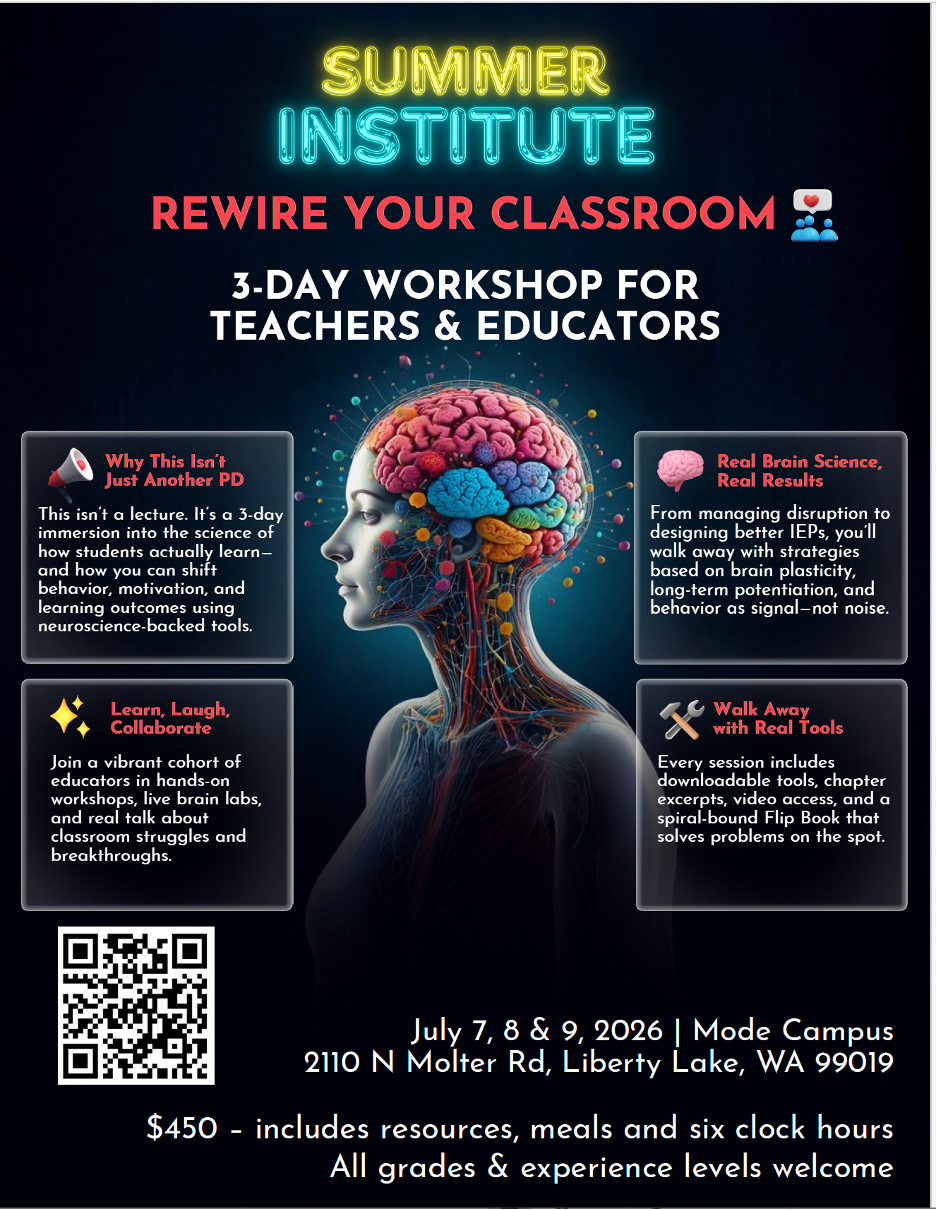
July 2026
Summer Institute

Transform your Classroom…. Engage every student… Love teaching.
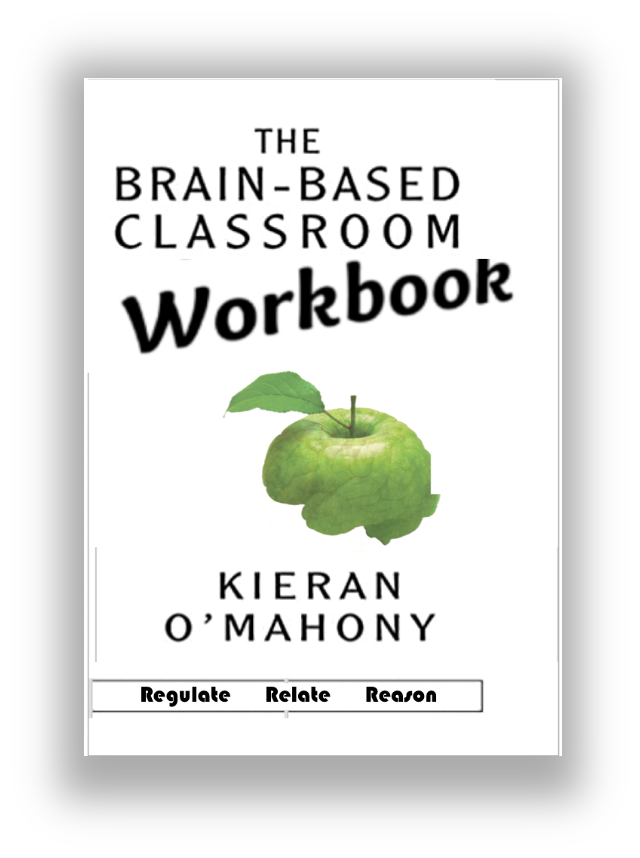
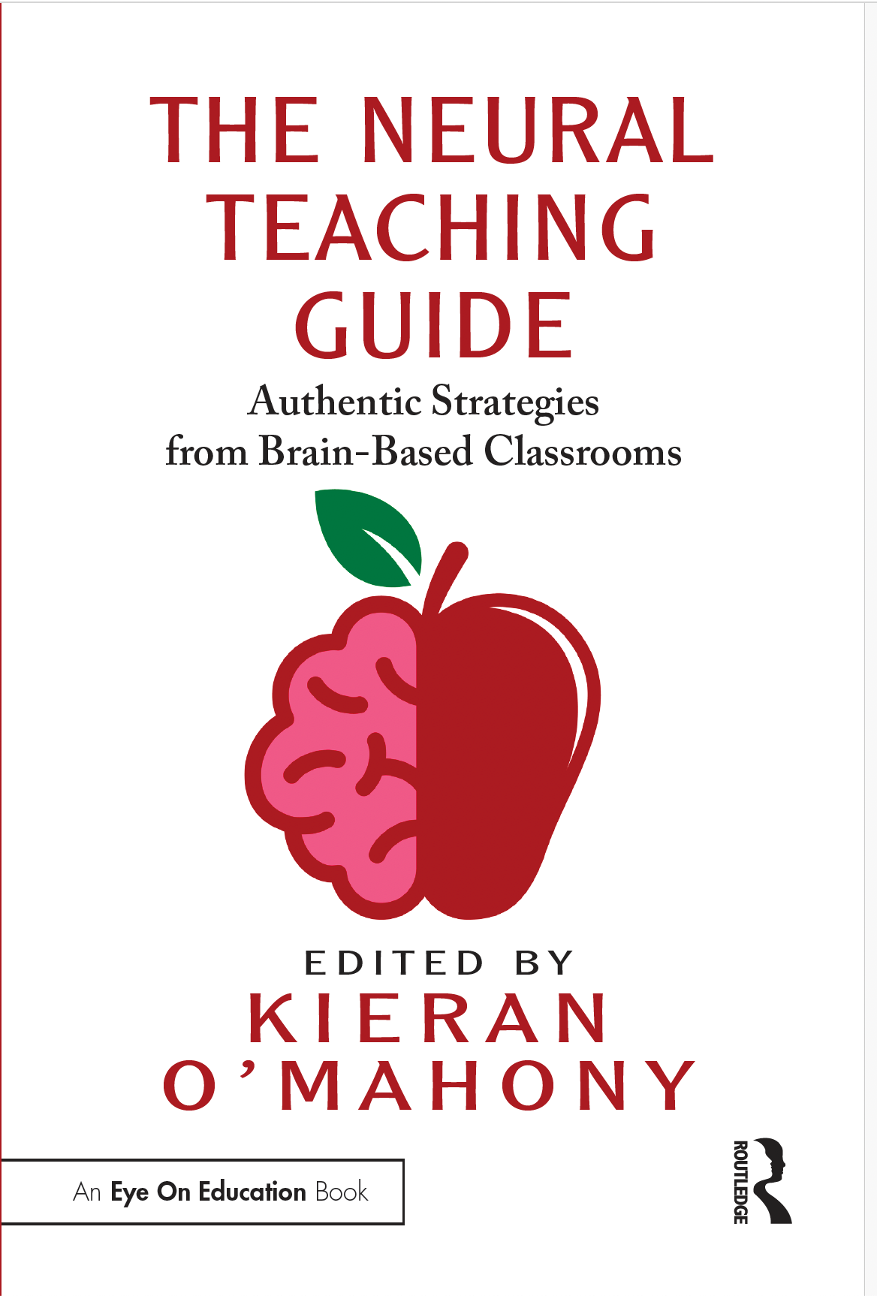
Tiger Schmiger Readers

Best sellers
Transform your classroom with mental models that are grounded in cognitive work, synaptic plasticity and Long-Term Potentiation.
In the conventional classroom, 1 in 3 children are automatically set up for failure. Standardized teaching models leave many children behind. We missed the Cognitive revolution.
Teachers feel overwhelmed and stuck.
Behavioral issues distract the entire classroom
Regulate Relate Reason: 60 Simple Tools for Teachers to Implement Now!
Each two-page spread offers strategies delivered in a problem-solution format that mimics real life classroom challenges.
The solutions offered are designed to help you tap into the latest neuroscience research on how the brain learns and will not only help you create a more stimulating and positive learning environment, but they'll also improve your students' outcomes.
Academic Papers
-
Abstract
This study highlights evidence that a brain-based approach to teaching and learning reverses many accepted beliefs about behavior and school and, in addition, delivers academic and social emotional outcomes that positively impact learners. Methodologies and practice reported here are aligned with a cognitive approach to education for the twenty-first century and, as such, informs a roadmap for an effective implementation of the National Education Policy 2020 (NEP) in school systems across India. Academic success and student social and emotional wellbeing associated with a remote learning experience in a cognitive model that involved teacher professional development delivered asynchronously from Seattle underscores the adaptability of the undertaking. In total, 35 educators, and 400 students were taught online via zoom in the middle of a pandemic that caused dislocation and stress at many levels. Data was collected via instruments that facilitated a mixed method study. Video recordings of teacher professional development, online discussions and follow up fine-tuning of methods and practice were captured throughout the duration of the experiment. Teachers and parents were interviewed (also online) and recordings were translated into English where needed. An intrinsically motivated treatment group was contrasted with a traditional extrinsically motivated control group. Findings highlight a significant advantage regarding academic achievement in State administered CBSE examinations where children in the cognitive treatment cohort outperformed peers who were in the traditional control group. These results highlight implications for twenty-first century learning systems.
-
Abstract.
This study describes an academic enrichment and emotional wellbeing intervention for 15 ‘high risk’ elementary school children who were pulled out of ‘General Education’ (Gen Ed) classrooms for 40 minutes four-times a week during the Bangalore school year. The research question sought to learn if an intervention that was brain-based might reduce the achievement gap because of a shift in just one teacher’s mental model with respect to behavior. The null hypothesis stated that a teacher mental model that shifted to brain-based methodology would have no perceivable effect on (i) children’s academic achievement or (ii) their social and emotional engagement. This study was grounded in teacher education literature involving mental models that illuminate classroom management techniques designed to affect student academic and social/emotional outcomes. Subjects were drawn from second grade students (mean 6.7 years; n = 15) Study was an opportunistic quasi-experimental design that is reflective of schools across India. A mixed method analysis was chosen to describe a complicated learning space that involved multiple classrooms, classroom teachers, and 15 sets of parents. Qualitative ethnographic data using grounded theory were triangulated with quantitative measures that best account for observed processes and resultant outcomes. Findings highlight significant academic, and social and emotional growth, which dramatically reduced the achievement gap for all participants. Further research is suggested to deepen an understanding of teacher mental models in the classroom. Implications of this study suggest plausible accounts for replication in large urban schools in and beyond India.
-
Description text goes here

Refresh the Signal
Read Latest Research from Dr. Kieran
What we do
It all begins with an idea. Why is my child struggling in school? How come some of my lessons are incredibly engaging and others are simply blah, blah. The reason I became a teacher is lost in days like this. It turns out that it all comes down to vocabulary. Words we use feed our mental models - these mental models change the way we teach.

Human Brain


Learn about Brain


Hippocampus
Teacher PD Summer Institute July 2026